
On Forgiveness
How does one forgive oneself?

There are kinds of forgiveness we offer others almost artlessly, small pardons that pass through us like polite gestures. We excuse lateness, forgive a sharp word, a broken promise, sometimes even the silence of someone who never apologizes. But the kind of forgiveness that unsettles me most is the one we owe ourselves.
I have come to realize that some people move through the world being hard on others, while some of us turn that harshness inward. Without any mystery I belong to the second kind. Not because I want to, and not because there is any pride in it, but because somewhere along the way I learned that this was the only way to grow. I believed that if I pressed hard enough on my own flaws, if I refused myself comfort, I might become a better person. And so, for as long as I can remember, I have carried a cruelty toward myself like a second spine. With others, I am patient. I listen. I search for reasons for their mistakes and call it compassion. But when it comes to me, there is no such kindness.
Why is it so easy to be gentle with others, and so difficult to be gentle with myself?

My voice softens when someone else is hurting. I offer what I can, the best advice I know. I place myself in their shoes and try, as honestly as I can, to comfort what can still be comforted. I listen without judgment. I tell them that life is hard, that they did what they could, that they deserve patience. The words come naturally, almost without thinking. But when the same mercy is meant for me, something in me completely shuts down. The tenderness disappears. I speak to myself in ways I would never dare speak to another human being.
Sometimes I wonder whether the kindness we offer others is easier partly because it can be seen. It confirms the person we believe ourselves to be. Kindness toward oneself, however, happens quietly. No one sees it. No one praises it. Perhaps that is why I resist it, why I deny myself the very mercy I scatter so generously around me. There is something deeply sad about living this way, giving the world our gentleness while withholding it from the one heart that carries us through everything. There lives a voice in my head that never goes silent. It is there when I wake up, there when I lie down, there in the mundane. It remembers what I wish would fade: the words I said wrong, the chances I let pass, the years that feel misplaced, the people who seemed to move forward while I stood still, the moments I should have been braver, smarter, better. From that voice, other things begin to take shape. Guilt. Shame. They stretch out behind me like shadows. I do not always see them, but I feel their presence wherever I go, following my steps with a patience that never seems to tire.
Maybe that is why I keep returning to something Toni Morrison once said in an interview. When she was asked whether it is possible for someone to forgive themselves even after doing something terrible, she answered simply: yes, it is called grace. There is something almost unbearable in how gentle that answer is. It does not argue. It does not excuse. It does not erase what has been done. It simply leaves room for the possibility that a person may be more than the worst thing they have done, or the worst thing they believe about themselves.
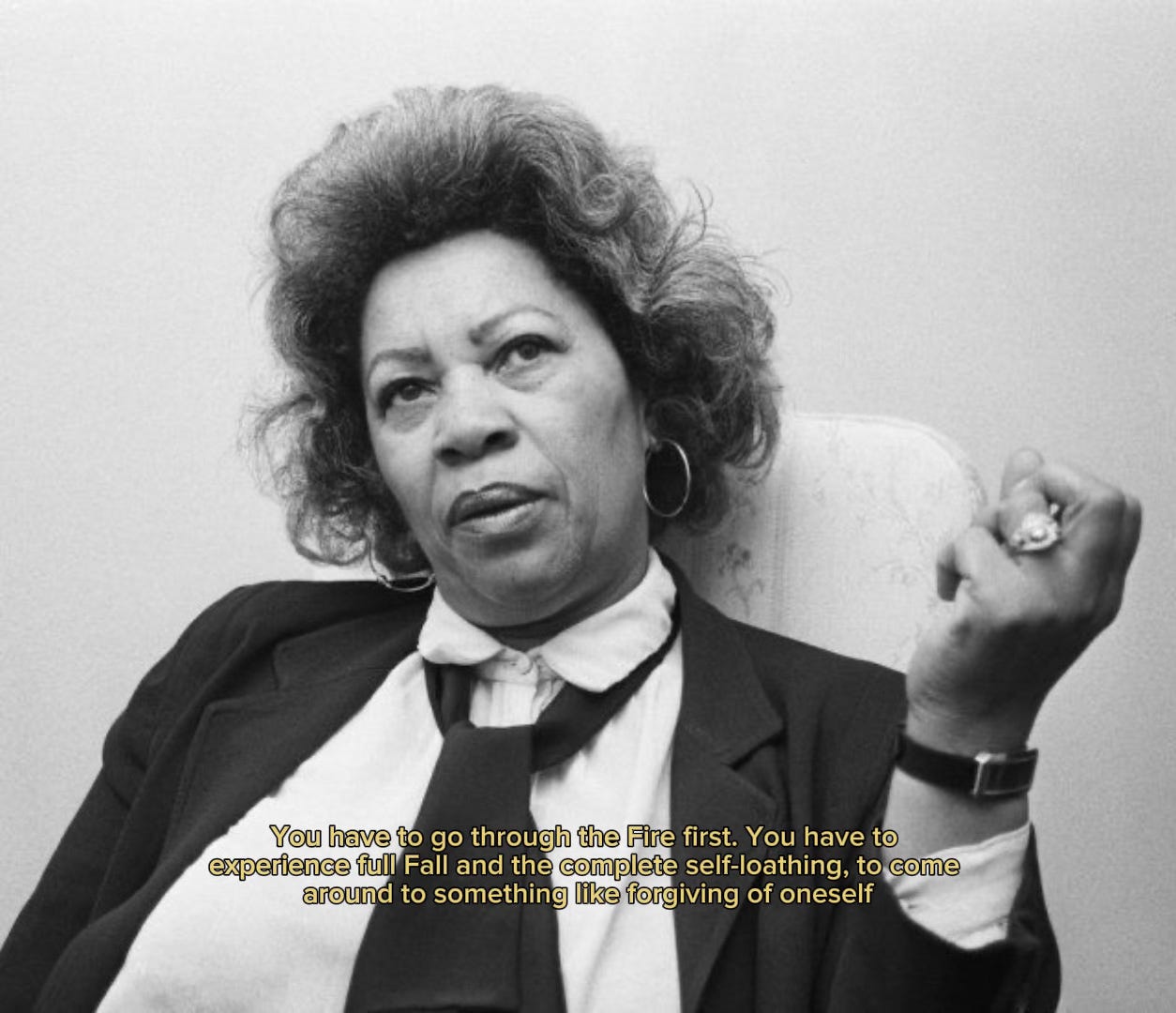
I think that is the part I struggle with most, not the idea of guilt, because guilt comes easily to me, but the idea of grace. Grace asks for something harder. It asks me to believe that punishment is not the only path to honesty, and that I do not have to keep reopening every wound in order to prove that I remember it.
For a long time, I believed that if I punished myself enough, I would become better. That harshness was a kind of discipline. That regret was a way to stay honest. But years pass, and punishment does not make me better. It only makes me tired.
Ramadan arrived this year as it always does, carrying with it this very language of forgiveness. During this month, we speak often of Allah’s mercy, of how it is greater than our sins, of how no matter how far we go, the door remains open. I have heard these words many times before, but this year they reached me differently. I found myself wondering what it means to believe in divine mercy while refusing any trace of mercy toward myself. What does it mean to ask for forgiveness, yet remain unwilling to loosen my grip on my own mistakes?
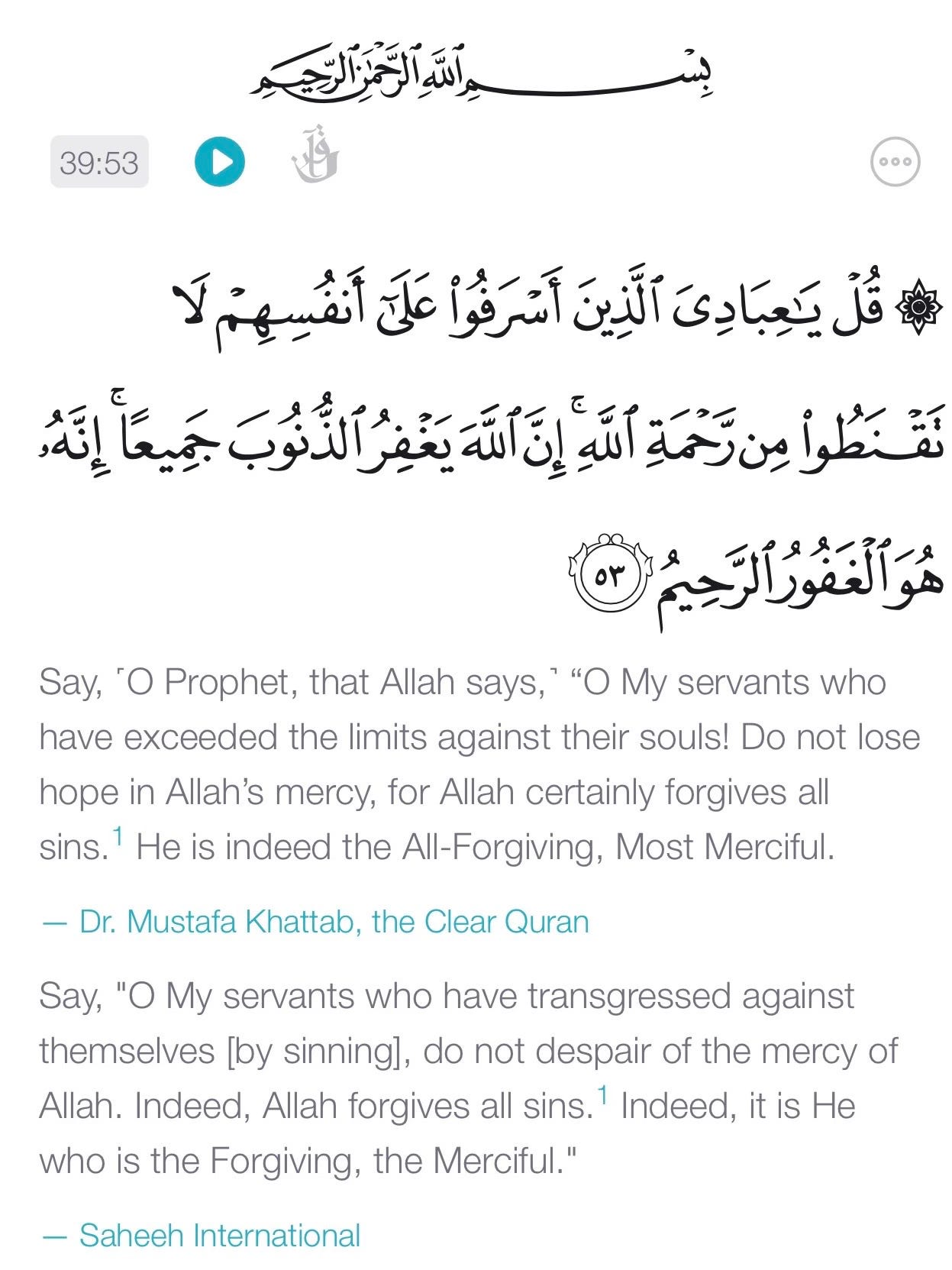
I know how to ask Allah for forgiveness. I learned early that to be human is to fall short, and that mercy lives somewhere above us, waiting to be asked for with enough humility. While reciting the Qur’an, a verse kept returning to my mind:
“O my servants who have transgressed against themselves (by sinning), do not despair of the mercy of Allah. Indeed, Allah forgives all sins. Indeed, it is He who is the Forgiving, the Merciful.”
Islam insists on accountability, but it also insists on mercy. One of the most repeated invocations in the Qur’anic imagination is that God is Al-Ghafur, the One who forgives again and again, that God is Ar-Rahman, the Most Merciful. Ar-Rahim, the Especially Merciful.
If divine mercy can exceed human failure, why is it so difficult for me to allow even a fragment of that mercy to touch my soul? who am I to refuse forgiveness to myself? Why do I act as if my mistakes are greater than His mercy?
Maybe self-forgiveness is not the same as excusing everything. Maybe it is not pretending that the past did not happen, or that I have never failed, or that I do not carry regret. Maybe it is simply choosing not to turn regret into a permanent home. Maybe it is believing that I can be honest about who I have been without condemning myself forever for it.
I am not writing this because I have mastered forgiveness. I have not. I still return too easily to blame, to shame, to the old habit of thinking pain is proof of sincerity. But I am beginning, slowly, to understand that mercy is not something meant only for other people. It is not weakness to offer it to myself. It may be the only way to keep going without hardening completely.
So perhaps forgiveness begins there, not as a grand moment of release, but as a quieter decision: to speak to myself more gently, to let the past instruct me without letting it devour me, and to trust that becoming better does not have to begin with cruelty. Perhaps that, too, is a form of faith.