
On Detachment
Detachment as a negotiation between desire and surrender

Every time someone enters my life, I feel it: the small, almost imperceptible click of attachment, like a seatbelt snapping into place. I haven’t decided to fasten it. I don’t even notice reaching for it. And every time someone leaves, I feel the same click again, the release, as if some internal mechanism has been observing the whole time, taking notes, filing the whole thing under Do Not Mistake for Indifference.
Detachment, in my case, is not a serene monkish achievement. It is a very active, very noisy awareness that I am attached while simultaneously rehearsing the grammar of letting go. As if I am learning two languages at once: Caring and Surrender. The first is fluent; the second keeps making mistakes.
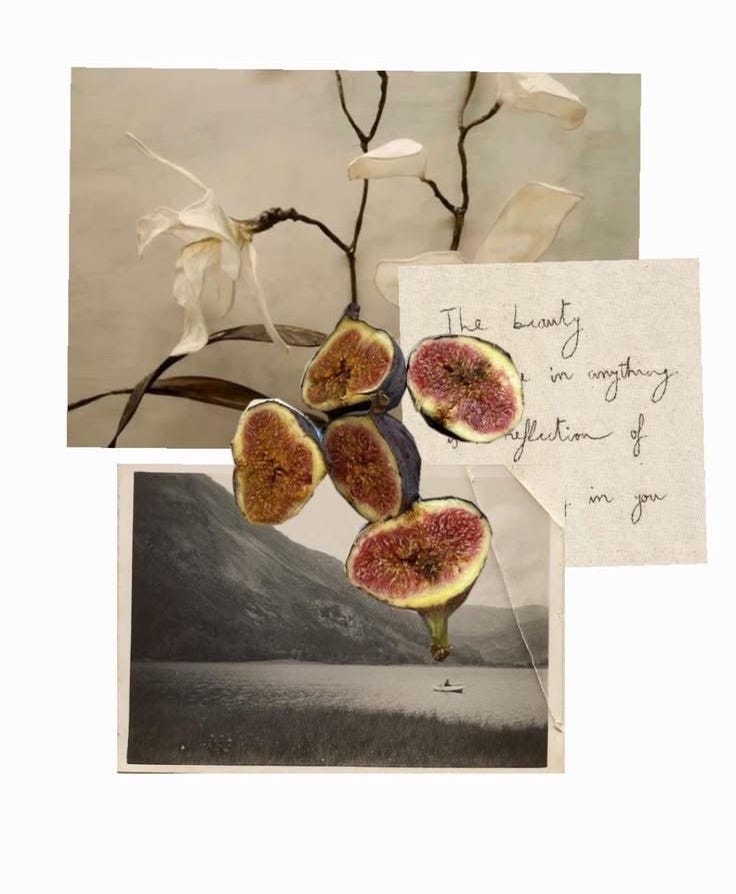
I did not always have words for this doubleness. For a long time, it lived in me as a sensation rather than a concept, something I practiced instinctively, long before I could name it. If I trace it back, it begins in a place where language had not yet caught up with feeling. I learned to read rooms before I learned to read books. Not the fashionable, therapeutic kind of “reading the room” people mention on LinkedIn, but the survival kind. You develop it when your emotional weather depends on grown-ups who are tired, worried, or about to disappear.
My mother’s face was my first text. I memorized the lines around her eyes, the slight tightening of her mouth when she was about to leave on a trip, to work, back to another city where life was pulling her. I was attached to her in the way small children are: as if she were the axis on which the world turned. And then she would leave, and that axis would tilt. I would stay with my grandmother, whose love was warm and steady, but not the same. A child does not know how to articulate that. A child just knows: something essential has shifted.
So I learned to scan. To anticipate. To prepare. Somewhere in that preparation, a habit formed: I would attach fiercely, and at the same time, guard myself against the pain of separation. Call it a primitive form of detachment. Call it self-defense dressed up as wisdom. Call it what it was: a way of loving with one hand and holding an exit route with the other.
Years later, in friendships and careers and relationships that felt like “this is it, finally,” I kept meeting the same pattern: I want to be close, but I also want to be ready to lose. I want to want, but I don’t want to suffer for wanting.
So I read about non-attachment. I watched videos with soothing voices telling me to “release the outcome” and “trust the universe” as if the universe were a very patient customer service line. Detachment, in the social media version, is a clean aesthetic: candles, journaling, a quote about how “if it’s meant for you, it will stay.” Very little grief. Very little mess.
But here’s the thing: detachment is not what Instagram made it. It is not a filter you apply to your life to make your heart look more zen. Real detachment is awkward. It is embarrassing. It is waking up in the middle of the night realizing you are still attached, even though you went to bed committed to “surrender.”
What is it like to detach, really?
It is like trying to unclench a fist you’ve had closed so long you forgot what open feels like. It is like loving someone and whispering, under your breath, I am not holding you hostage to my need for you to stay. It is like working hard on a project and then, when the results come, remembering that your worth is not nailed to that spreadsheet, that email, that approval.
And yet, theory is very brave. Practice is shy.
I suspect I am not alone in this. We say “detachment” and think we mean one thing, when in fact there are several. There is emotional withdrawal, which says, “I will not feel, because feeling hurts.” There is disciplined non-attachment: “I will feel, but I will not let my stability depend on this.” And there is spiritual surrender: “I will do my part, and I will entrust the outcome to God.”
For a long time, I confused withdrawal with surrender. I told myself I was “letting go” when I was actually numbing. I called it maturity. I framed it as wisdom. But numbness is not wisdom; it is exhaustion with better PR.
I wanted the calm of true detachment without the cost. I wanted the tawakkul of the saints without the vulnerability of the humans.
At some point, the question shifted from “How do I stop caring so much?” to “What does it mean to put this in God’s hands?”
In Arabic, the word taslīm carries both “surrender” and “peace.” It’s not just resignation; it’s handing over with a kind of relief. The Qur’an speaks of those who say, when struck by calamity:
“Indeed, we belong to Allah, and indeed to Him we will return.” [Qur'an 2:156]
“إِنَّا لِلّهِ وَإِنَّـا إِلَيْهِ رَاجِعونَ”
On paper, this is beautiful. In practice, it is a gut punch. To say “I belong to Allah” is to admit that what I love does not ultimately belong to me. To say “to Him we will return” is to look at every person, every ambition, every dream and whisper: You are not mine to keep.
And then there is the verse that feels like a direct challenge to my need for control:
“And whoever relies upon Allah—then He is sufficient for him.” [Surah At-Talaq (65:3)]
“وَمَن يَتَوَكَّلْ عَلَى اللَّهِ فَهُوَ حَسْبُهُ”
Sufficient. Not “He will give you exactly what you want,” but “He will be enough for you.” That is a very different promise. It does not spare you from loss. It saves you from the delusion that you are the one keeping everything from falling apart.
Detachment, in an Islamic sense, is not walking away from life. It is walking through it with a different grip. The Prophet said, when a man asked whether he should tie his camel or leave it to Allah: “Tie it, and trust in Allah.” Effort, then surrender. Not effort or surrender.
So I try. I try. I plan, I write, I love, I show up. And then I say, with all the sincerity I can muster: Hasbun Allāh wa ni‘mal-wakīl. “Allah is sufficient for us, and He is the best Disposer of affairs.”
But my heart is stubborn. It still breaks. It still aches.
I can imagine my life without certain ambitions, but without my family, loved ones? I shudder. And that is where detachment becomes not a theory, but a test.
How do I detach from people I love without becoming cold? How do I hold them without holding on so tightly that I turn love into a leash?
I do not have a perfect formula. I only have this: I am learning that detachment is not “I don’t care.” It is “I care, and I will not make my caring into a cage.” I am learning that grief is not a failure of faith. That crying when someone leaves does not mean I have failed at tawakkul. It means I am human.
The Qur’an tells us that the hearts of the believers find rest in the remembrance of Allah: “Unquestionably, by the remembrance of Allah hearts are assured.” But notice: it does not say “by the denial of your humanity.” It does not say “by pretending you are not attached.” It says: remember. Return. Again and again. Even when you are attached. Even when you are grieving. Even when your idea of detachment is a very dramatic, very attached form of drama.
Then there is the other attachment: to my own significance.
I am an academic. I have spent years building a life where my value is measured by lectures given, papers published, students impressed. I tell myself I care about knowledge, about service, about truth. Part of that is sincere. Part of it is a polished story I tell so I don’t have to admit that I also care about being seen, chosen, confirmed.
Detaching from ambition is not refusing to work. It is refusing to let my worth be a hostage to outcomes I do not control.
Some nights, I lie awake replaying an email, a comment, a rejection. I calculate. I strategize. I bargain with Allah in my head: If you just let me have this, I’ll be more grateful. I’ll be better. And then, somewhere between planning and prayer, I catch myself: Whose life is this, exactly?
The Qur’an is almost teasing in its clarity: “You do not will unless He wills.” Which is both terrifying and deeply relieving. It removes me from the throne I keep trying to sit on. It tells me: you are not God. You were never meant to be
So here is what I am learning, against my better instincts: Detachment is not easy, and it is not a personality trait. It is a practice. Social media has made surrender look like a yoga pose. It is more like surgery. You will lose things. You will grieve people. The goal is not to avoid pain; it is to stop building your identity on what you cannot keep. Surrender is not “I don’t care.” It is “I care, and I am placing this in God’s hands.” Awareness is more important than perfection. It is better to notice your attachment and name it honestly than to pretend you are above it.
I am not writing this as someone who has arrived. I am writing as someone who keeps arriving and then realizing they are still attached. Who says “I have let go” and then finds themselves clutching the air.
This is not a conclusion. It is a set of questions I am trying to live through: Can I love people fully and still be ready to lose them? Can I work hard and still accept that the outcome is not mine? What does taslīm actually feel like in the body, not just in theory? How do I distinguish between healthy surrender and the more cowardly form of “letting go” that is really just fear in a spiritual costume? Is it possible to be attached and detached at the same time, or is that just a fancy way of saying I am conflicted?
I do not have clean answers. I have moments. Moments when I feel the click of attachment and the quieter click of surrender, almost overlapping. Moments when I say, with my whole chest: I belong to Allah, and to Him I return, and then spend the next hour panicking about an email.
Detachment, for me, is not a state. It is a practice of noticing. A practice of returning. A practice of trying, failing, and trying again, with as much honesty and as little self-dramatization as I can manage.
So beautiful 😍
this is so beautiful❤️so real